
The Science of Art
Art can be described as a creative expression of one's thoughts, ideas, emotions, and perception. It shows how the world is viewed through varying lenses of a beholder. The science of art is not about reducing art to formulas, but understanding why certain forms, colours, sounds, or movements reliably impact the human experience.
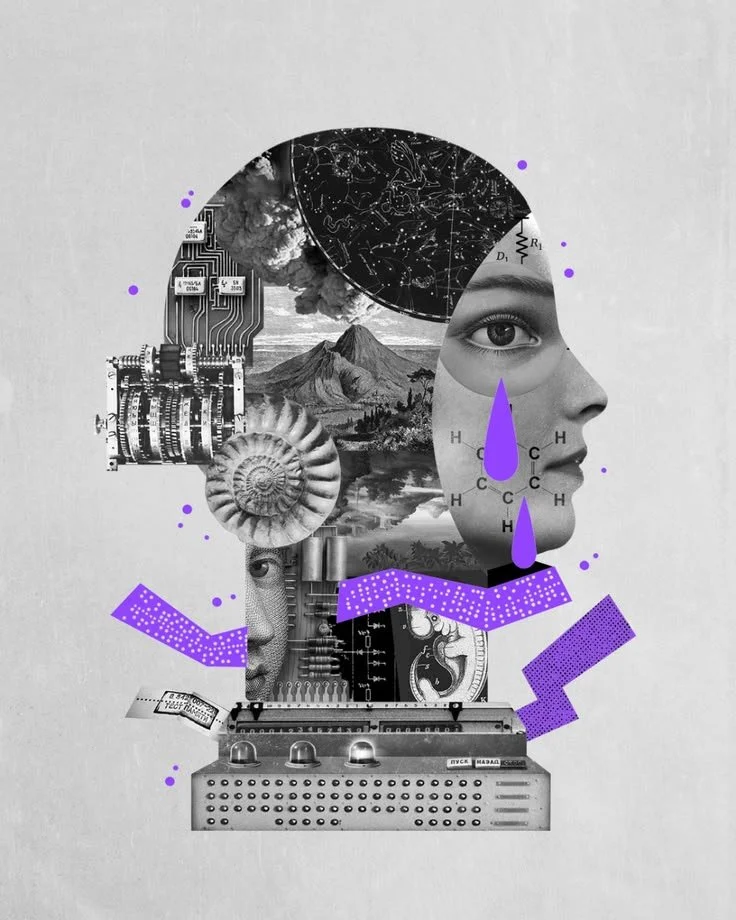
Neuroscience shows that the brain prioritises edges, symmetry, and movement. It shows that viewing art activates reward circuits (dopamine), emotional centres (the amygdala), and meaning-making networks (the default mode network).
The science of vision investigates how the brain's visual cortex receives, processes and interprets information from the retina when we see various colours, patterns and forms. The brain detects edges, contrast, symmetry, and motion first. Gestalt principles (closure, similarity, proximity) explain why certain layouts 'feel right'.
Our predictive brain constantly anticipates and suggests our activities. At the most basic level, art engages our sensory systems. We tend to enjoy art that sits between familiar and foreign, offering patterns we recognise while subtly disrupting them. This tension activates reward pathways and keeps our attention engaged.
The theory of embodied cognition explains that we subconsciously imitate actions we see and feel from our environment. This is why the same artwork can provoke different emotions across societies without invalidating either response.
Art therapy relies on evidence-based theory that music, poetry, and graphics can modulate heart rate and lower cortisol levels. Art also triggers emotional responses. It has been discovered that certain colours can influence our mood. Different wavelengths stimulate neural responses; warm colours tend to feel closer and more arousing, cool colours more distant and calming.
Art tends to obey some laws of physics, even when it breaks protocol. Music is sound waves in organised vibration: Sculpting depends on structural mechanics such as load, tension, and balance. The physics of colour shows that all colour results from light wavelengths striking a surface. The reflection, absorption, and scattering of pigments determine how they behave and reflect to our eyes. Oil, watercolour, and digital pixels all impact photons differently.
Artists experiment intuitively while science explains why the experiment works. The reason art moves us is rooted in how the human brain perceives, processes, and assigns meaning to the world. It is a meeting point where neurons, emotions, and culture converge to help us understand ourselves and one another.
